Showing posts with label Book. Show all posts
 Details about Wow Tattoos Ambigram Tattoo Flash Book 140 Words Phrasehttp://www.wowtattoos.com/images/cover03.gif
ambigram words
An ambigram is a indicated expression, art form or other symbolic representation whose elements retain so this means when interpreted or seen from some other way, point of view, or orientation.
This is of the ambigram might either change, or stay the same, when seen or interpreted from different perspectives.
Douglas R. Hofstadter represents an ambigram as a "calligraphic design that handles to press two different readings in to the selfsame group of curves." Different ambigram painters (sometimes called ambigramists) may create completely different ambigrams from the same expression or words, differing in both style and form.
Discovery and popularity
The earliest known non-natural ambigram schedules to 1893 by designer Peter Newell. Although better known for his children's books and illustrations for Make Twain and Lewis Carroll, he published two catalogs of invertible illustrations, in which the picture turns into a different image when turned upside down entirely. The past page in his book Topsys & Turvys contains the phrase THE END, which, when inverted, reads PUZZLE. In Topsys & Turvys #2 2 (1902), Newell concluded with a variation on the ambigram in which THE END changes into PUZZLE 2.
The Verbeek remove "The UpsideDowns of old man Muffaroo and little sweetheart Lovekins" used ambigrams in 3 consecutive whitening strips in March,1904, but normally the format of the use was prevented by this remove of term balloons.
From June to September, 1908, the British regular monthly The Strand published a series of ambigrams by differing people in its "Curiosities" column. Of particular interest is the actual fact that four of people submitting ambigrams believed them to be always a unusual property of particular words. Mitchell T. Lavin, whose "chump" was published in June, wrote, "I think it is in the only phrase in the British language which has this peculiarity," while Clarence Williams wrote, about his "Gamble" ambigram, "Possibly B is the sole letter of the alphabet that will produce such an interesting anomaly."
In 1969, Raymond Loewy designed the rotational NEW MAN ambigram logo design, which continues to be used today. The mirror ambigram DeLorean Motor Logo design was first found in 1975.
John Langdon and Scott Kim each assumed that that they had created ambigrams in the 1970s also. Langdon and Kim are most likely both artists who've been most responsible for the popularization of ambigrams. John Langdon produced the first reflection image logo "Starship" in 1975. Robert Petrick, who designed the invertible Angel logo design in 1976, was also an early affect on ambigrams.
The earliest known published mention of the word ambigram was by Hofstadter, who attributed the origin of the expressed word to conversations among a tiny group of friends during 1983-1984. The initial 1979 edition of Hofstadter's G?del, Escher, Bach highlighted two 3-D ambigrams on the cover.
Ambigrams became popular as a result of Dan Dark brown incorporating John Langdon's designs in to the story of his bestseller, Angels & Demons, and the Dvd movie release of the Angels & Demons movie consists of a bonus chapter called "This is an Ambigram". Langdon also produced the ambigram that was used for a few types of the book's cover. Dark brown used the name Robert Langdon for the hero in his novels as an homage to John Langdon.
In music, the Grateful Dead have used ambigrams several times, including on their albums Aoxomoxoa and American Beauty.
In the first group of the English show Trick or Treat, the show's coordinator and creator Derren Dark brown uses cards with rotational ambigrams. These credit cards can read either 'Strategy' or 'Treat'.
Although the words spelled by most ambigrams are short long relatively, one DVD cover for The Princess Bride movie creates a rotational ambigram out of two words: "Princess Bride," whether looked at right side or ugly up.
The Transformers movie series have logos that are a automatic robot face whether seen right aspect up or upside down. You will discover two such logos, one for an Autobot, and one for a Decepticon.
In 2015 iSmart's logo design using one of its travel chargers travelled viral because upside-down it read "+Jews!" The business noted that "...we learned a robust lesson of what never to do when creating a company logo."
Types of Ambigram
Ambigrams are exercises in graphic design that play with optical illusions, symmetry and aesthetic notion. Some ambigrams feature a relationship between their form and their content. Ambigrams usually belong to one of several categories:
3-Dimensional
- A design where an object is shown that can look to read several characters or words when looked at from different sides. Such designs can be made using constructive solid geometry.
Chain
- A design where a term (or sometimes words) are interlinked, creating a repeating chain. Characters are usually overlapped meaning that a term begins partway through another expressed term. Chain ambigrams are offered by means of a circle sometimes.
Dihedral
- An all natural mirror-image ambigram consisting of numerical digits.
Figure-ground
- A design where the areas between the characters of 1 word form another term.
Fractal
- A version of space-filling ambigrams where the tiled phrase branches from itself and then shrinks in a self-similar manner, forming a fractal. See Scott Kim's fractal of the term "TREE" for an animated example.
Mirror-image
- A design that can be read when reflected in a mirror, as the same term or expression both ways usually. Ambigrams that form different words when viewed in the mirror are also known as glass door ambigrams, because they could be printed on the glass door to be read differently when entering or exiting.
Multi-Lingual
- An ambigram that can be read a proven way in one terminology and another real way in an alternative terms. Multi-lingual ambigrams can exist in all of the many styles of ambigrams, with multi-lingual perceptual transfer ambigrams being eye-catching particularly.
AMBIGRAMS CUSTOM AMBIGRAM DESIGNS – BY CLAYTON MABEY Page 5
 http://xambigramsx.files.wordpress.com/2010/06/masonwatermark-jpg-10002.jpg
Creating A Flyer With Word MSU Educational Psychology And
 http://blog.omy.sg/kysean/files/2009/02/2-preview-ambigram-animated.gif
ambigrams ambigram female girl girl s katie name woman october 12 2011
 http://eugeneuymatiao.files.wordpress.com/2011/10/katie_ambigram.jpg?w=575
Ambigram Tattoo Designs And Meanings; Ambigram Tattoo Ideas
 http://usercontent2.hubimg.com/6644245_f260.jpg
OIP.M3df190b2a367d6aa182a0d96d511c7f5o0
236B100EE49B1B916282677A01A0137F9053DDE464http://www.ebay.com/itm/Wow-Tattoos-Ambigram-Tattoo-Flash-Book-140-Words-Phrase-/380212131890
Embed Our image to your website
ThumbnailImageEmbed Our image to a Forum
ThumbnailImage
Details about Wow Tattoos Ambigram Tattoo Flash Book 140 Words Phrase
 Illuminati Ambigram Angels And Demons Book angels amp; demons andhttp://slambigrams.files.wordpress.com/2010/12/illuminati-a-640x286.jpg
ambigram words
An ambigram is a expression, talent or other symbolic representation whose elements sustain so this means when viewed or interpreted from another type of path, point of view, or orientation.
This is of the ambigram may either change, or stay the same, when seen or interpreted from different perspectives.
Douglas R. Hofstadter details an ambigram as a "calligraphic design that handles to press two different readings in to the selfsame set of curves." Different ambigram music artists (sometimes called ambigramists) may create very different ambigrams from the same phrase or words, differing in both style and form.
Discovery and popularity
The initial known non-natural ambigram times to 1893 by artist Peter Newell. Although better known for his children's books and illustrations for Mark Twain and Lewis Carroll, he shared two catalogs of invertible illustrations, in which the picture turns into a different image when turned upside down entirely. The final page in his book Topsys & Turvys provides the phrase THE FINISH, which, when inverted, reads PUZZLE. In Topsys & Turvys #2 2 (1902), Newell ended with a variance on the ambigram where the last end changes into PUZZLE 2.
The Verbeek strip "The UpsideDowns of old man Muffaroo and little female Lovekins" used ambigrams in 3 consecutive whitening strips in March,1904, but otherwise the format of the use was avoided by this strip of phrase balloons.
From June to September, 1908, the British isles regular The Strand shared some ambigrams by differing people in its "Curiosities" column. Of particular interest is the actual fact that four of folks submitting ambigrams believed them to be a uncommon property of particular words. Mitchell T. Lavin, whose "chump" was posted in June, wrote, "I believe it is in the only phrase in the English language which includes this peculiarity," while Clarence Williams had written, about his "Gamble" ambigram, "Possibly B is the only letter of the alphabet that will produce such an interesting anomaly."
In 1969, Raymond Loewy designed the rotational NEW MAN ambigram emblem, which is still used today. The mirror ambigram DeLorean Motor Logo design was first used in 1975.
John Langdon and Scott Kim also each assumed that they had invented ambigrams in the 1970s. Langdon and Kim are probably both artists who have been most in charge of the popularization of ambigrams. John Langdon produced the first reflection image emblem "Starship" in 1975. Robert Petrick, who designed the invertible Angel logo in 1976, was an early on impact on ambigrams also.
The initial known published mention of the word ambigram was by Hofstadter, who attributed the origin of the expressed word to conversations among a tiny group of friends during 1983-1984. The original 1979 edition of Hofstadter's G?del, Escher, Bach featured two 3-D ambigrams on the cover.
Ambigrams became more popular consequently of Dan Brown incorporating John Langdon's designs into the story of his bestseller, Angels & Demons, and the Dvd movie release of the Angels & Demons movie has a bonus chapter called "That is an Ambigram". Langdon also produced the ambigram that was used for a few versions of the book's cover. Dark brown used the name Robert Langdon for the hero in his books as an homage to John Langdon.
In music, the Grateful Dead have used ambigrams many times, including on the albums Aoxomoxoa and American Beauty.
Within the first group of the British show Trick or Treat, the show's number and originator Derren Brown uses credit cards with rotational ambigrams. These credit cards can read either 'Strategy' or 'Treat'.
Although the words spelled by most ambigrams are short long relatively, one Dvd and blu-ray cover for The Princess Bride-to-be movie creates a rotational ambigram out of two words: "Princess Bride," whether viewed right side or ugly up.
The Transformers movie series have logos that are a automatic robot face whether viewed right area up or ugly. You can find two such logos, one for an Autobot, and one for a Decepticon.
In 2015 iSmart's emblem on one of its travel chargers went viral because upside-down it read "+Jews!" The business known that "...we learned a robust lesson of what never to do when making a custom logo."
Types of Ambigram
Ambigrams are exercises in graphic design that play with optical illusions, symmetry and visible belief. Some ambigrams include a marriage between their form and their content. Ambigrams usually fall under one of the categories:
3-Dimensional
- A design where an object is provided that can look to read several words or words when seen from different perspectives. Such designs can be generated using constructive sturdy geometry.
Chain
- A design in which a term (or sometimes words) are interlinked, forming a repeating chain. Letters are usually overlapped and therefore a expression begins partway through another word. Chain ambigrams are presented in the form of a group sometimes.
Dihedral
- An all natural mirror-image ambigram consisting of numerical digits.
Figure-ground
- A design in which the areas between the letters of one term form another portrayed expression.
Fractal
- A version of space-filling ambigrams where the tiled word branches from itself and then shrinks in a self-similar manner, building a fractal. See Scott Kim's fractal of the word "TREE" for an animated example.
Mirror-image
- A design that may be read when reflected in a mirror, usually as the same expression or term both ways. Ambigrams that form different words when viewed in the mirror are also called glass door ambigrams, because they can be printed over a cup door to be read differently when exiting or getting into.
Multi-Lingual
- An ambigram that can be read the best way in a single vocabulary and other ways in a different vocabulary. Multi-lingual ambigrams can exist in every of the various varieties of ambigrams, with multi-lingual perceptual transfer ambigrams being stunning specifically.
Hope / Faith Ambigram Tattoo Design Ambigram Tattoo Designs at
 https://www.wowtattoos.com/wow/wow_samples/HOPE-FAITH-thumb-D.gif
Download image Ambigram Tattoo Designs PC, Android, iPhone and iPad
 http://free-tattoo-designs.org/wp-content/gallery/ambigram-tattoos/ambigram-tattoos-03.jpg
Trustquot; Ambigram v.1 A custom ambigram of the wo… Flickr Photo
 http://farm3.staticflickr.com/2477/3971302339_c890a96ac5.jpg
Goldfinger”, rotational ambigram unterart ambigram design
 http://unterart.files.wordpress.com/2011/03/goldfinger.jpg
OIP.M4f625bde8560c249c194d7aea8196492H0
490ECE827E915DF60C5A3E994FC930C6EA46D9893http://imgarcade.com/1/illuminati-ambigram-angels-and-demons
Embed Our image to your website
ThumbnailImageEmbed Our image to a Forum
ThumbnailImage
Illuminati Ambigram Angels And Demons Book angels amp; demons and
 Details about Wow Tattoos Ambigram Tattoo Flash Book 140 Words Phrasehttp://www.wowtattoos.com/images/dreamspinning.gif
ambigram words
An ambigram is a phrase, art form or other symbolic representation whose elements keep so this means when viewed or interpreted from a new way, point of view, or orientation.
The meaning of the ambigram may either change, or continue to be the same, when interpreted or seen from different perspectives.
Douglas R. Hofstadter describes an ambigram as a "calligraphic design that handles to press two different readings in to the selfsame group of curves." Different ambigram music artists (sometimes called ambigramists) may create completely different ambigrams from the same word or words, differing in both form and style.
Popularity and discovery
The initial known non-natural ambigram schedules to 1893 by designer Peter Newell. Although better known for his children's literature and illustrations for Make Twain and Lewis Carroll, he published two books of invertible illustrations, in which the picture turns into a different image totally when turned upside down. The very last page in his book Topsys & Turvys contains the phrase THE final end, which, when inverted, reads PUZZLE. In Topsys & Turvys #2 2 (1902), Newell finished with a variation on the ambigram in which THE END changes into PUZZLE 2.
The Verbeek strip "The UpsideDowns of old man Muffaroo and little sweetheart Lovekins" used ambigrams in 3 consecutive whitening strips in March,1904, but in any other case the format of the remove prevented the use of term balloons.
From June to September, 1908, the British monthly The Strand published some ambigrams by differing people in its "Curiosities" column. Of particular interest is the fact that four of individuals submitting ambigrams presumed them to be always a unusual property of particular words. Mitchell T. Lavin, whose "chump" was posted in June, had written, "I think it is in the only expression in the British language which includes this peculiarity," while Clarence Williams published, about his "Guess" ambigram, "Possibly B is the sole notice of the alphabet that will produce this interesting anomaly."
In 1969, Raymond Loewy designed the rotational NEW MAN ambigram logo, today which continues to be in use. The mirror ambigram DeLorean Motor Company logo was first used in 1975.
John Langdon and Scott Kim also each believed that that they had invented ambigrams in the 1970s. Langdon and Kim are most likely both artists who have been most accountable for the popularization of ambigrams. John Langdon produced the first reflection image logo "Starship" in 1975. Robert Petrick, who designed the invertible Angel company logo in 1976, was also an early on influence on ambigrams.
The earliest known published reference to the word ambigram was by Hofstadter, who attributed the origin of the expressed word to conversations among a tiny group of friends during 1983-1984. The initial 1979 edition of Hofstadter's G?del, Escher, Bach included two 3-D ambigrams on the cover.
Ambigrams became more popular as a result of Dan Dark brown incorporating John Langdon's designs in to the story of his bestseller, Angels & Demons, and the Disc release of the Angels & Demons movie has a bonus section called "This is an Ambigram". Langdon also produced the ambigram that was used for a few variants of the book's cover. Dark brown used the true name Robert Langdon for the hero in his novels as an homage to John Langdon.
In music, the Grateful Deceased have used ambigrams many times, including on the albums American and Aoxomoxoa Beauty.
Inside the first series of the United kingdom show Trick or Treat, the show's variety and inventor Derren Brown uses cards with rotational ambigrams. These cards can read either 'Technique' or 'Treat'.
Although the words spelled by most ambigrams are relatively short in length, one Dvd and blu-ray cover for The Princess Bride movie creates a rotational ambigram out of two words: "Princess Bride-to-be," whether seen right aspect or ugly up.
The Transformers movie series have logos that are a robot face whether seen right part up or upside down. You can find two such logos, one for an Autobot, and one for a Decepticon.
In 2015 iSmart's logo design on one of its travel chargers travelled viral because upside-down it read "+Jews!" The ongoing company mentioned that "...we learned a robust lessons of what never to do when creating a logo design."
Types of Ambigram
Ambigrams are exercises in graphical design that play with optical illusions, symmetry and visible conception. Some ambigrams feature a marriage between their form and their content. Ambigrams usually fall under one of the categories:
3-Dimensional
- A design where an subject is shown that will appear to learn several words or words when seen from different angles. Such designs can be generated using constructive stable geometry.
Chain
- A design in which a expression (or sometimes words) are interlinked, building a repeating string. Characters are usually overlapped and therefore a term will start partway through another phrase. Sometimes chain ambigrams are presented by means of a circle.
Dihedral
- A natural mirror-image ambigram consisting of numerical digits.
Figure-ground
- A design in which the spaces between your letters of 1 phrase form another expressed phrase.
Fractal
- A version of space-filling ambigrams where in fact the tiled word branches from itself and then shrinks in a self-similar manner, building a fractal. See Scott Kim's fractal of the term "TREE" for an animated example.
Mirror-image
- A design that can be read when mirrored in a mirror, as the same expression or expression both ways usually. Ambigrams that form different words when viewed in the mirror are also known as glass door ambigrams, because they can be printed over a glass door to be read differently when entering or exiting.
Multi-Lingual
- An ambigram that can be read the best way in a single language and yet another way in another dialect. Multi-lingual ambigrams can exist in all of the many styles of ambigrams, with multi-lingual perceptual change ambigrams being attractive specifically.
, then an ambigram tattoo design may be just what you39;re looking for
 http://emilyjwest.files.wordpress.com/2011/05/img_0748.jpg
, then an ambigram tattoo design may be just what you39;re looking for
http://emilyjwest.files.wordpress.com/2011/05/img_0748.jpgFamily / Forever Ambigram Tattoo Design Ambigram Tattoo Designs at
 https://www.wowtattoos.com/wow/wow_samples/FAMILY-FOREVER-thumb-CUSTOM.gif
Phillip”, “Phil, rotational ambigrams
 https://unterart.files.wordpress.com/2010/11/ursula_philip.jpg
OIP.M3ec424c0c3b0a4bc1def37bab4cf6a72o0
356B100EE49B1B9162826736E4A682CF013C6B805Dhttp://www.ebay.com/itm/Wow-Tattoos-Ambigram-Tattoo-Flash-Book-140-Words-Phrase-/380212131890
Embed Our image to your website
ThumbnailImageEmbed Our image to a Forum
ThumbnailImage
Details about Wow Tattoos Ambigram Tattoo Flash Book 140 Words Phrase
 Wow Tattoos Ambigram Tattoo Flash Book 5 Words Phraseshttp://www.wowtattoos.com/images/book%20thumbs/book5-1.jpg
ambigram words
An ambigram is a expressed expression, art form or other symbolic representation whose elements retain interpretation when interpreted or looked at from an alternative path, point of view, or orientation.
The meaning of the ambigram might either change, or continue to be the same, when interpreted or looked at from different perspectives.
Douglas R. Hofstadter details an ambigram as a "calligraphic design that handles to squeeze two different readings into the selfsame set of curves." Different ambigram musicians and artists (sometimes called ambigramists) may create completely different ambigrams from the same word or words, differing in both style and form.
Popularity and discovery
The earliest known non-natural ambigram schedules to 1893 by musician Peter Newell. Although better known for his children's literature and illustrations for Draw Twain and Lewis Carroll, he released two catalogs of invertible illustrations, in which the picture turns into a different image when turned upside down entirely. The very last page in his book Topsys & Turvys contains the phrase THE FINISH, which, when inverted, reads PUZZLE. In Topsys & Turvys #2 2 (1902), Newell finished with a variant on the ambigram where the last end changes into PUZZLE 2.
The Verbeek strip "The UpsideDowns of old man Muffaroo and little woman Lovekins" used ambigrams in 3 consecutive whitening strips in March,1904, but often the format of the remove avoided the utilization of phrase balloons.
From to September June, 1908, the United kingdom every month The Strand released a series of ambigrams by different people in its "Curiosities" column. Of particular interest is the actual fact that all four of individuals submitting ambigrams presumed them to be a unusual property of particular words. Mitchell T. Lavin, whose "chump" was printed in June, composed, "I think it is in the only term in the English language which includes this peculiarity," while Clarence Williams composed, about his "Choice" ambigram, "Possibly B is really the only notice of the alphabet that will produce such an interesting anomaly."
In 1969, Raymond Loewy designed the rotational NEW MAN ambigram emblem, which continues to be used today. The mirror ambigram DeLorean Motor Company logo was first used in 1975.
John Langdon and Scott Kim also each believed that that they had created ambigrams in the 1970s. Langdon and Kim are most likely both artists who have been most responsible for the popularization of ambigrams. John Langdon produced the first mirror image logo "Starship" in 1975. Robert Petrick, who designed the invertible Angel emblem in 1976, was also an early on impact on ambigrams.
The initial known published mention of the word ambigram was by Hofstadter, who attributed the origin of the word to conversations among a little group of friends during 1983-1984. The initial 1979 edition of Hofstadter's G?del, Escher, Bach featured two 3-D ambigrams on the cover.
Ambigrams became popular because of this of Dan Dark brown incorporating John Langdon's designs into the plot of his bestseller, Angels & Demons, and the Disc release of the Angels & Demons movie is made up of a bonus section called "This is an Ambigram". Langdon also produced the ambigram that was used for some variations of the book's cover. Dark brown used the name Robert Langdon for the hero in his novels as an homage to John Langdon.
In music, the Grateful Dead have used ambigrams several times, including on the albums American and Aoxomoxoa Beauty.
Within the first group of the British isles show Treat or Strategy, the show's sponsor and originator Derren Dark brown uses cards with rotational ambigrams. These credit cards can read either 'Technique' or 'Treat'.
Although what spelled by most ambigrams are brief long relatively, one Dvd and blu-ray cover for The Princess Bride movie creates a rotational ambigram out of two words: "Princess Bride-to-be," whether seen right part or upside down up.
The Transformers movie series have logos that are a automatic robot face whether looked at right aspect up or upside down. You can find two such logos, one for an Autobot, and one for a Decepticon.
In 2015 iSmart's emblem using one of its travel chargers gone viral because upside-down it read "+Jews!" The ongoing company noted that "...we learned a robust lesson of what not to do when creating a custom logo."
Types of Ambigram
Ambigrams are exercises in graphic design that play with optical illusions, symmetry and visual perception. Some ambigrams feature a romance between their form and their content. Ambigrams usually fall into one of several categories:
3-Dimensional
- A design where an object is provided that will appear to read several words or words when viewed from different angles. Such designs can be generated using constructive stable geometry.
Chain
- A design where a expression (or sometimes words) are interlinked, building a repeating chain. Characters are usually overlapped meaning that a term will start partway through another word. String ambigrams are offered in the form of a circle sometimes.
Dihedral
- A natural mirror-image ambigram comprising numerical digits.
Figure-ground
- A design in which the areas between the letters of 1 term form another term.
Fractal
- A version of space-filling ambigrams where the tiled expression branches from itself and then shrinks in a self-similar manner, building a fractal. See Scott Kim's fractal of the word "TREE" for an animated example.
Mirror-image
- A design that may be read when reflected in a reflection, usually as the same term or term both ways. Ambigrams that form different words when viewed in the mirror are also called glass door ambigrams, because they can be branded on a glass door to be read in different ways when exiting or coming into.
Multi-Lingual
- An ambigram that can be read the best way in a single terms and another way in another type of terms. Multi-lingual ambigrams can exist in every of the various varieties of ambigrams, with multi-lingual perceptual shift ambigrams being particularly striking.
Russia With Love”, rotational ambigram unterart ambigram design
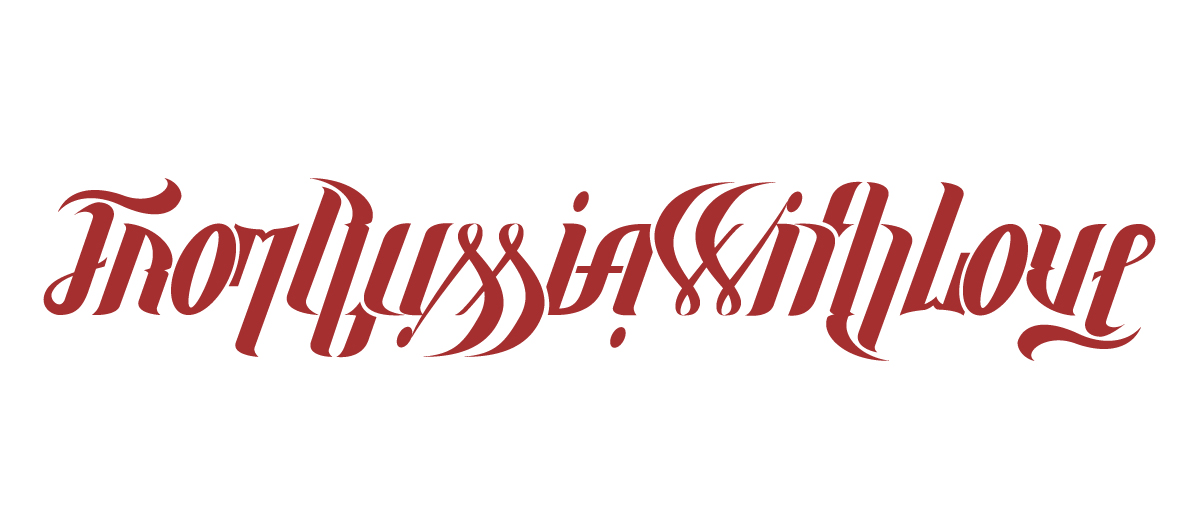 https://unterart.files.wordpress.com/2011/03/from_russia_with_love.jpg
Ambigram – Orrin Ambigrafix
 http://manokan.files.wordpress.com/2007/04/orrin-ambigram-web.jpg?w=391&h=306
Pin Ambigram Of The Words One Love Family Created For A Tattoo Design
 http://www.tattooshunt.com/images/04/colored-ink-ambigram-tattoos.jpg
Entry No. 3 Words by Dawnland
 http://www.letraspace.com/wp-content/uploads/2013/11/dawnland_words_Sc-1024x1024.jpg
OIP.Mb3d522d6acdd7cc4726b339275da848ao0
28FCE927413E761DE0E13F59392A0FF5D1416DA2BFhttp://popscreen.com/p/mtmymdy4nje0/wow-tattoos-ambigram-tattoo-flash-book-5-words+phrases-ebay
Embed Our image to your website
ThumbnailImageEmbed Our image to a Forum
ThumbnailImage
Wow Tattoos Ambigram Tattoo Flash Book 5 Words Phrases
 Wow Tattoos Ambigram Tattoo Flash Book 5 Words Phraseshttp://img0118.popscreencdn.com/162405747_wow-tattoos-ambigram-tattoo-flash-book-140-words-phrase.jpg
ambigram words
An ambigram is a indicated term, talent or other symbolic representation whose elements preserve interpretation when looked at or interpreted from an alternative path, point of view, or orientation.
The meaning of the ambigram might either change, or continue to be the same, when viewed or interpreted from different perspectives.
Douglas R. Hofstadter describes an ambigram as a "calligraphic design that manages to squash two different readings into the selfsame group of curves." Different ambigram designers (sometimes called ambigramists) may create completely different ambigrams from the same word or words, differing in both form and style.
Popularity and discovery
The earliest known non-natural ambigram times to 1893 by artist Peter Newell. Although better known for his children's books and illustrations for Draw Twain and Lewis Carroll, he publicized two books of invertible illustrations, in which the picture turns into a different image when turned upside down entirely. The past page in his book Topsys & Turvys provides the phrase THE final end, which, when inverted, reads PUZZLE. In Topsys & Turvys #2 2 (1902), Newell finished with a variance on the ambigram in which THE END changes into PUZZLE 2.
The Verbeek remove "The UpsideDowns of old man Muffaroo and little girl Lovekins" used ambigrams in 3 consecutive whitening strips in March,1904, but normally the format of the utilization was prevented by this remove of expression balloons.
From June to September, 1908, the United kingdom every month The Strand printed some ambigrams by differing people in its "Curiosities" column. Of particular interest is the actual fact that all four of the individuals submitting ambigrams thought them to be always a exceptional property of particular words. Mitchell T. Lavin, whose "chump" was posted in June, composed, "I think it is in the only term in the English language which has this peculiarity," while Clarence Williams published, about his "Wager" ambigram, "Possibly B is the only letter of the alphabet that will produce this interesting anomaly."
In 1969, Raymond Loewy designed the rotational NEW MAN ambigram company logo, today which is still in use. The mirror ambigram DeLorean Motor Company logo was first used in 1975.
John Langdon and Scott Kim each believed that they had developed ambigrams in the 1970s also. Langdon and Kim are probably both artists who have been most in charge of the popularization of ambigrams. John Langdon produced the first reflection image custom logo "Starship" in 1975. Robert Petrick, who designed the invertible Angel logo in 1976, was also an early on affect on ambigrams.
The earliest known published mention of the word ambigram was by Hofstadter, who attributed the origin of the word to conversations among a tiny group of friends during 1983-1984. The initial 1979 edition of Hofstadter's G?del, Escher, Bach highlighted two 3-D ambigrams on the cover.
Ambigrams became popular therefore of Dan Brown incorporating John Langdon's designs in to the story of his bestseller, Angels & Demons, and the Disc release of the Angels & Demons movie is made up of a bonus section called "That is an Ambigram". Langdon also produced the ambigram that was used for a few variants of the book's cover. Dark brown used the name Robert Langdon for the hero in his novels as an homage to John Langdon.
In music, the Grateful Deceased have used ambigrams many times, including on the albums American and Aoxomoxoa Beauty.
In the first group of the United kingdom show Treat or Strategy, the show's number and inventor Derren Dark brown uses credit cards with rotational ambigrams. These cards can read either 'Technique' or 'Treat'.
Although the words spelled by most ambigrams are relatively short long, one DVD cover for The Princess Bride movie creates a rotational ambigram out of two words: "Princess Bride-to-be," whether looked at right aspect up or upside down.
The Transformers movie series have logos that are a robot face whether seen right part up or ugly. There are two such logos, one for an Autobot, and one for a Decepticon.
In 2015 iSmart's company logo using one of its travel chargers went viral because upside-down it read "+Jews!" The ongoing company noted that "...we learned a robust lesson of what never to do when creating a logo."
Types of Ambigram
Ambigrams are exercises in graphic design that play with optical illusions, symmetry and visual understanding. Some ambigrams include a romance between their form and their content. Ambigrams usually fall into one of several categories:
3-Dimensional
- A design where an subject is shown that can look to read several letters or words when viewed from different perspectives. Such designs can be generated using constructive sound geometry.
Chain
- A design where a phrase (or sometimes words) are interlinked, creating a repeating string. Characters are usually overlapped and therefore a term begins partway through another word. Sometimes chain ambigrams are presented in the form of a circle.
Dihedral
- A natural mirror-image ambigram consisting of numerical digits.
Figure-ground
- A design in which the spots between your characters of 1 word form another phrase.
Fractal
- A version of space-filling ambigrams where in fact the tiled expression branches from itself and then shrinks in a self-similar manner, developing a fractal. See Scott Kim's fractal of the word "TREE" for an animated example.
Mirror-image
- A design that may be read when reflected in a reflection, as the same word or key phrase both ways usually. Ambigrams that form different words when viewed in the mirror are also known as glass door ambigrams, because they can be printed over a glass door to be read differently when entering or exiting.
Multi-Lingual
- An ambigram that may be read a method in one dialect and yet another way in a different dialect. Multi-lingual ambigrams can exist in every of the various styles of ambigrams, with multi-lingual perceptual shift ambigrams being particularly striking.
Ambigram Tattoo Generator Jhadi39;s Ambigram Tattoo AMBIGRAM TATTOO
 http://www.billcoughlan.com/images/ct-ambigram.gif
Double Words Optical Illusion Ambigram Polyvore
 http://www.polyvore.com/cgi/img-thing?.out=jpg&size=l&tid=12020831
Hastily made, but still alright. Chad was less successful than I had
 https://somethingaweek.files.wordpress.com/2012/11/dan-john-chad.jpg
Bella Ambigram Tattoo Design
 http://www.tattooshunt.com/images/04/bella-ambigram-tattoo-design.jpg
OIP.Md6fcbd6f3875661189a4fa67dc8c4f4bo0
31FCE927413E761DE0E13FAC6E375382FDDA664845http://popscreen.com/p/mtmymdy4nje0/wow-tattoos-ambigram-tattoo-flash-book-5-words+phrases-ebay
Embed Our image to your website
ThumbnailImageEmbed Our image to a Forum
ThumbnailImage
Wow Tattoos Ambigram Tattoo Flash Book 5 Words Phrases
 Details about Wow Tattoos Ambigram Tattoo Flash Book 140 Words Phrasehttp://www.wowtattoos.com/images/book%20thumbs/3-2.jpg
ambigram words
An ambigram is a expressed expression, talent or other symbolic representation whose elements retain meaning when interpreted or viewed from a different course, point of view, or orientation.
This is of the ambigram may either change, or stay the same, when interpreted or looked at from different perspectives.
Douglas R. Hofstadter represents an ambigram as a "calligraphic design that manages to squash two different readings in to the selfsame set of curves." Different ambigram musicians and artists (sometimes called ambigramists) may create very different ambigrams from the same phrase or words, differing in both form and style.
Discovery and popularity
The earliest known non-natural ambigram times to 1893 by musician Peter Newell. Although better known for his children's catalogs and illustrations for Symbol Twain and Lewis Carroll, he shared two literature of invertible illustrations, in which the picture turns into a different image totally when turned upside down. The last page in his publication Topsys & Turvys contains the phrase THE final end, which, when inverted, reads PUZZLE. In Topsys & Turvys #2 2 (1902), Newell concluded with a variance on the ambigram in which THE END changes into PUZZLE 2.
The Verbeek strip "The UpsideDowns of old man Muffaroo and little woman Lovekins" used ambigrams in 3 consecutive pieces in March,1904, but otherwise the format of the utilization was prevented by this strip of word balloons.
From June to September, 1908, the British regular The Strand printed a series of ambigrams by differing people in its "Curiosities" column. Of particular interest is the fact that four of folks submitting ambigrams assumed them to be a uncommon property of particular words. Mitchell T. Lavin, whose "chump" was released in June, wrote, "I think it is in the only word in the English language which includes this peculiarity," while Clarence Williams had written, about his "Bet" ambigram, "Possibly B is really the only letter of the alphabet that will produce such an interesting anomaly."
In 1969, Raymond Loewy designed the rotational NEW MAN ambigram logo design, which is still in use today. The mirror ambigram DeLorean Motor Logo design was first found in 1975.
John Langdon and Scott Kim also each presumed that that they had developed ambigrams in the 1970s. Langdon and Kim are most likely both artists who've been most responsible for the popularization of ambigrams. John Langdon produced the first mirror image logo design "Starship" in 1975. Robert Petrick, who designed the invertible Angel emblem in 1976, was also an early effect on ambigrams.
The initial known published mention of the term ambigram was by Hofstadter, who attributed the origin of the word to conversations among a little group of friends during 1983-1984. The original 1979 edition of Hofstadter's G?del, Escher, Bach presented two 3-D ambigrams on the cover.
Ambigrams became more popular consequently of Dan Dark brown incorporating John Langdon's designs in to the story of his bestseller, Angels & Demons, and the Movie release of the Angels & Demons movie contains a bonus section called "That is an Ambigram". Langdon also produced the ambigram that was used for a few types of the book's cover. Dark brown used the name Robert Langdon for the hero in his books as an homage to John Langdon.
In music, the Grateful Dead have used ambigrams many times, including on the albums American and Aoxomoxoa Beauty.
In the first series of the United kingdom show Treat or Strategy, the show's coordinator and creator Derren Brown uses credit cards with rotational ambigrams. These cards can read either 'Technique' or 'Treat'.
Although what spelled by most ambigrams are short long relatively, one Disc cover for The Princess Bride-to-be movie creates a rotational ambigram out of two words: "Princess Bride," whether looked at right aspect up or ugly.
The Transformers movie series have logos that are a automatic robot face whether viewed right part up or ugly. A couple of two such logos, one for an Autobot, and one for a Decepticon.
In 2015 iSmart's logo using one of its travel chargers went viral because upside-down it read "+Jews!" The company noted that "...we learned a robust lessons of what never to do when creating a logo design."
Types of Ambigram
Ambigrams are exercises in graphical design that play with optical illusions, symmetry and visual conception. Some ambigrams feature a romantic relationship between their form and their content. Ambigrams usually belong to one of the categories:
3-Dimensional
- A design where an thing is offered that can look to learn several letters or words when looked at from different sides. Such designs can be produced using constructive sound geometry.
Chain
- A design in which a expression (or sometimes words) are interlinked, creating a repeating chain. Words are usually overlapped meaning that a word begins partway through another expressed word. Sometimes chain ambigrams are presented by means of a circle.
Dihedral
- An all natural mirror-image ambigram consisting of numerical digits.
Figure-ground
- A design in which the places between your words of one word form another expressed phrase.
Fractal
- A version of space-filling ambigrams where the tiled term branches from itself and then shrinks in a self-similar manner, building a fractal. See Scott Kim's fractal of the word "TREE" for an animated example.
Mirror-image
- A design that may be read when mirrored in a reflection, as the same expression or term both ways usually. Ambigrams that form different words when viewed in the mirror are also known as glass door ambigrams, because they could be printed over a glass door to be read differently when entering or exiting.
Multi-Lingual
- An ambigram that can be read a proven way in one language and another real way in some other terminology. Multi-lingual ambigrams can exist in every of the various varieties of ambigrams, with multi-lingual perceptual shift ambigrams being particularly striking.
Faith And Hope Ambigram Tattoos Designs_4 Tattoospedia
 http://tattoospedia.com/deepsearches/Ambigram%20Tattoos/Faith%20And%20Hope%20Ambigram%20Tattoos%20Designs%201_(4).jpg
Triangle And Eye Grey Ink Optical Illusion Tattoo
 http://www.tattoostime.com/images/341/word-illusion-ambigram-tattoo-design.jpg
tomcdonnell.net
 http://www.tomcdonnell.net/content/art/word_art/ambigram_amanda.jpg
Faithquot; amp; quot;Gracequot; Ambigram, v.3 Flickr Photo Sharing!
 http://farm6.staticflickr.com/5451/7094832415_1b7d521a0c_z.jpg
OIP.Me8213aa785e1697c2a4b40b4bd98dceeo0
186B100EE49B1B91628267F62BE8D770F1663AC00Dhttp://www.ebay.com/itm/Wow-Tattoos-Ambigram-Tattoo-Flash-Book-140-Words-Phrase-/380212131890
Embed Our image to your website
ThumbnailImageEmbed Our image to a Forum
ThumbnailImage
Details about Wow Tattoos Ambigram Tattoo Flash Book 140 Words Phrase
 Details about Wow Tattoos Ambigram Tattoo Flash Book 5 Words Phraseshttp://www.wowtattoos.com/images/book%20thumbs/book5-2.jpg
ambigram words
An ambigram is a expression, talent or other symbolic representation whose elements preserve so this means when seen or interpreted from another direction, perspective, or orientation.
The meaning of the ambigram may either change, or continue to be the same, when interpreted or viewed from different perspectives.
Douglas R. Hofstadter explains an ambigram as a "calligraphic design that handles to squash two different readings into the selfsame set of curves." Different ambigram artists (sometimes called ambigramists) may create very different ambigrams from the same word or words, differing in both style and form.
Discovery and popularity
The initial known non-natural ambigram dates to 1893 by artist Peter Newell. Although better known for his children's books and illustrations for Symbol Twain and Lewis Carroll, he printed two literature of invertible illustrations, in which the picture turns into a different image when turned upside down entirely. The past page in his book Topsys & Turvys contains the phrase The ultimate end, which, when inverted, reads PUZZLE. In Topsys & Turvys #2 2 (1902), Newell concluded with a variant on the ambigram in which THE END changes into PUZZLE 2.
The Verbeek remove "The UpsideDowns of old man Muffaroo and little girl Lovekins" used ambigrams in 3 consecutive whitening strips in March,1904, but in any other case the format of the use was avoided by this strip of phrase balloons.
From June to September, 1908, the English monthly The Strand published a series of ambigrams by differing people in its "Curiosities" column. Of particular interest is the fact that four of the individuals submitting ambigrams assumed them to be a unusual property of particular words. Mitchell T. Lavin, whose "chump" was shared in June, had written, "I believe it is in the only phrase in the English language which includes this peculiarity," while Clarence Williams wrote, about his "Choice" ambigram, "Possibly B is the sole letter of the alphabet that will produce this interesting anomaly."
In 1969, Raymond Loewy designed the rotational NEW MAN ambigram company logo, today which is still in use. The mirror ambigram DeLorean Motor Company logo was first used in 1975.
John Langdon and Scott Kim each assumed that they had invented ambigrams in the 1970s also. Langdon and Kim are probably both artists who have been most responsible for the popularization of ambigrams. John Langdon produced the first reflection image logo design "Starship" in 1975. Robert Petrick, who designed the invertible Angel logo in 1976, was an early on effect on ambigrams also.
The initial known published mention of the term ambigram was by Hofstadter, who attributed the origin of the word to conversations among a tiny group of friends during 1983-1984. The original 1979 edition of Hofstadter's G?del, Escher, Bach featured two 3-D ambigrams on the cover.
Ambigrams became popular because of this of Dan Dark brown incorporating John Langdon's designs into the storyline of his bestseller, Angels & Demons, and the Dvd movie release of the Angels & Demons movie is made up of a bonus chapter called "This is an Ambigram". Langdon also produced the ambigram that was used for a few types of the book's cover. Darkish used the true name Robert Langdon for the hero in his novels as an homage to John Langdon.
In music, the Grateful Deceased have used ambigrams many times, including on their albums American and Aoxomoxoa Beauty.
Within the first group of the United kingdom show Treat or Strategy, the show's number and creator Derren Brown uses cards with rotational ambigrams. These cards can read either 'Technique' or 'Treat'.
Although what spelled by most ambigrams are relatively short in length, one Dvd and blu-ray cover for The Princess Bride-to-be movie creates a rotational ambigram out of two words: "Princess Bride-to-be," whether seen right part up or upside down.
The Transformers movie series have logos that are a automatic robot face whether looked at right part up or upside down. A couple of two such logos, one for an Autobot, and one for a Decepticon.
In 2015 iSmart's company logo using one of its travel chargers went viral because upside-down it read "+Jews!" The ongoing company mentioned that "...we learned a powerful lessons of what not to do when creating a logo design."
Types of Ambigram
Ambigrams are exercises in graphic design that play with optical illusions, symmetry and visible conception. Some ambigrams feature a romance between their form and their content. Ambigrams usually fall into one of the categories:
3-Dimensional
- A design where an thing is presented that can look to learn several words or words when looked at from different angles. Such designs can be made using constructive solid geometry.
Chain
- A design in which a phrase (or sometimes words) are interlinked, forming a repeating chain. Letters are usually overlapped and therefore a term will start partway through another word. Chain ambigrams are shown in the form of a group sometimes.
Dihedral
- A natural mirror-image ambigram consisting of numerical digits.
Figure-ground
- A design in which the spots between your letters of 1 phrase form another word.
Fractal
- A version of space-filling ambigrams where the tiled phrase branches from itself and then shrinks in a self-similar manner, creating a fractal. See Scott Kim's fractal of the term "TREE" for an animated example.
Mirror-image
- A design that can be read when reflected in a mirror, as the same phrase or key phrase both ways usually. Ambigrams that form different words when viewed in the mirror are also known as glass door ambigrams, because they could be branded over a cup door to be read in a different way when exiting or joining.
Multi-Lingual
- An ambigram that can be read one of the ways in one words and another real way in a new words. Multi-lingual ambigrams can exist in every of the various styles of ambigrams, with multi-lingual perceptual shift ambigrams being particularly striking.
Noah Ambigram Clip Art at Clker.com vector clip art online, royalty
 http://www.clker.com/cliparts/5/b/k/l/v/1/noah-ambigram-hi.png
AmbigramTattooDesignsandAmbigramTattooMeaning2.jpg
 http://mastertattoos.net/wp-content/uploads/2012/04/Ambigram-Tattoo-Designs-and-Ambigram-Tattoo-Meaning-2.jpg
Details about Wow Tattoos Ambigram Tattoo Flash Book 5 Words+Phrases
http://www.wowtattoos.com/images/book%20thumbs/book5-2.jpgAnAmbigram can also be the SAME word when read one way say the
 http://ambagram.com/SINNER-SAINT-K_sm.jpg
OIP.M3206e50e06a1068c97b9962c2a3dbcfco0
4274A39AA0E9F44B2D00A67A7048730D36CFC26C39http://ebay.com/itm/wow-tattoos-ambigram-tattoo-flash-book-5-words-phrases-/380212132610
Embed Our image to your website
ThumbnailImageEmbed Our image to a Forum
ThumbnailImage


